Can ClickFunnels Replace Your Website? A Complete Guide
If you are considering ClickFunnels for your online business, you may be wondering, “Can ClickFunnels replace my website?” The short answer is yes, in some situations, but not for every business. ClickFunnels can provide many of the components you need to establish an online presence, including landing pages, sales pages, checkout experiences, lead-generation pages and other funnel-based pages. However, a traditional website and a sales funnel are not exactly the same thing, even though they can sometimes perform overlapping roles. In this guide, I will explain when ClickFunnels can realistically replace a website, when a traditional website is still a better choice, how the two approaches differ and how you can decide which setup is appropriate for your business.
Can ClickFunnels Replace a Website?
Yes, ClickFunnels can replace a traditional website for certain businesses and business models.
However, whether it should replace your website is a different question.
ClickFunnels is primarily designed around sales funnels and conversion-focused customer journeys.
A traditional website is generally designed to provide a broader online presence.
For example, a traditional business website might contain:
Home
↓
About Us
↓
Services
↓
Blog
↓
Contact
↓
Frequently Asked Questions
A ClickFunnels-based presence might instead look like:
Landing Page
↓
Sales Page
↓
Checkout
↓
Thank You Page
The first structure encourages visitors to explore.
The second structure is designed to move visitors towards a particular action.
What Is ClickFunnels?
ClickFunnels, sales funnel platform is a marketing and sales platform designed to help businesses create conversion-focused online experiences.
You can use it to create pages and processes such as:
- Landing pages
- Sales pages
- Lead-generation pages
- Checkout pages
- Thank-you pages
- Webinar funnels
- Product funnels
- Lead magnet funnels
- Membership experiences
- Upsell and offer sequences
The central idea is to guide visitors through a specific journey.
For example:
Advertisement
↓
Landing Page
↓
Offer
↓
Checkout
↓
Purchase
This is fundamentally different from simply giving someone a website homepage and allowing them to choose where to go.

Funnels often underperform without proper testing and optimisation. Imagine continuously improving funnel performance for better results. ClickFunnels includes tools to optimise funnel effectiveness.
Learn More About Sales FunnelsWhat Is a Traditional Website?
A traditional website is usually a broader digital property containing multiple pages designed to serve different purposes.
For example, a company website might contain:
- Homepage
- About
- Services
- Products
- Blog
- Resources
- Contact
- Privacy Policy
- Terms
This type of structure can be useful when visitors need information before deciding what to do.
For example, someone researching a university, consultancy or professional service may want to explore several pages before making contact.

Struggling to manage an online store with poor performance and lost sales, imagine a smooth shopping experience that increases conversions, Hostinger Business Hosting powers eCommerce success with fast and stable infrastructure.
Website vs Sales Funnel
The simplest distinction is:
Website = Explore
Sales funnel = Convert
A website gives visitors multiple paths.
A funnel usually gives visitors a more controlled path.
For example, imagine you operate a digital marketing agency.
Your website could allow visitors to explore:
SEO Services
Website Design
Content Marketing
Social Media Marketing
About the Agency
Blog
A funnel for a particular service could instead say:
Get Your Free SEO Audit
↓
Enter Your Details
↓
Book Consultation
↓
Receive Proposal
The website supports broad exploration.
The funnel supports a specific conversion objective.
When Can ClickFunnels Replace Your Website?
ClickFunnels can potentially replace your traditional website when your business does not require a large informational web presence.
Several business models fit this approach particularly well.
1. Online Coaches
An online coach may not need dozens of website pages.
For example, a coach could create:
Personal Development Coaching
↓
Free Guide
↓
Email Follow-Up
↓
Coaching Offer
↓
Booking
This could provide the essential online infrastructure needed to attract and convert clients.
A coach may therefore be able to operate primarily through funnels.
2. Consultants
Consultants can also use ClickFunnels as their main online presence.
For example:
Consulting Landing Page
↓
Services
↓
Case Studies
↓
Book Consultation
The consultant may not need a large ecommerce-style website.
A focused funnel could communicate the service and encourage potential clients to take action.
3. Course Creators
Course creators are another strong use case.
Imagine that you sell a digital marketing course.
Your funnel could contain:
Course Landing Page
↓
Course Benefits
↓
Curriculum
↓
Testimonials
↓
Price
↓
Checkout
↓
Course Access
If your primary business objective is selling one course, you may not need a conventional website containing dozens of pages.
4. Digital Product Sellers
Suppose you sell:
- Ebooks
- Templates
- Marketing resources
- Training materials
- Digital downloads
You could create a dedicated funnel for each major product.
For example:
Ebook Advertisement
↓
Ebook Landing Page
↓
Product Information
↓
Checkout
↓
Download
In this situation, a funnel may provide most of what the business needs.
5. Coaches Selling One Main Programme
Suppose you have one premium coaching programme.
You might create:
Coaching Sales Page
↓
Testimonials
↓
Programme Details
↓
Application
↓
Call
This can be more efficient than building a large website with many pages that visitors rarely use.
6. Webinar Businesses
Businesses that generate customers through webinars can use a funnel-based structure.
For example:
Advertisement
↓
Webinar Registration
↓
Confirmation
↓
Webinar
↓
Offer
↓
Checkout
The entire customer journey is funnel-based.
A traditional website may therefore be unnecessary for the campaign itself.
7. Affiliate Marketers
Affiliate marketers may also use funnel-based websites.
For example:
Advertisement
↓
Comparison Page
↓
Educational Content
↓
Affiliate Offer
The marketer may not need a traditional corporate website.
However, affiliates should provide useful, trustworthy content rather than creating thin pages designed solely to push visitors towards affiliate links.
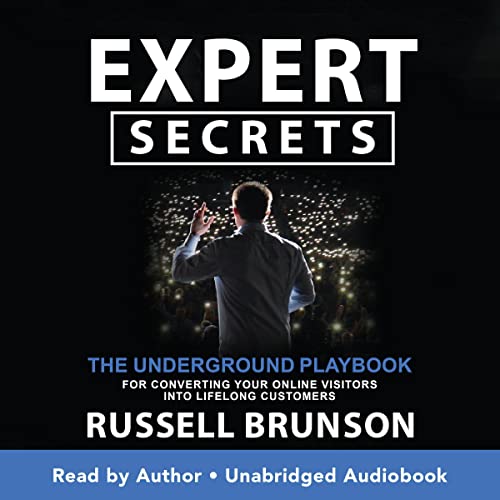
Get your copy of Expert Secrets here
| Offer | Type | Best For | Key Benefit | Investment |
| One Funnel Away Challenge | Free Training | Beginners, Coaches, E-commerce Sellers | Build and launch your first sales funnel with step-by-step guidance | Free |
| Sales Funnels Webinar | Free Webinar | Entrepreneurs & Small Business Owners | Learn the sales funnel strategies used by successful online businesses | Free |
| Five Day Lead Challenge | Free Challenge | Service Providers & Marketers | Generate more leads and build your email list faster | Free |
| AI Webinar Funnel Builder | Free Training + Tool | Coaches, Consultants & Experts | Create a webinar funnel using Artificial Intelligence in minutes | Free |
| The Last Secret | Free Training | Agencies & Entrepreneurs | Learn how to launch a Software-as-a-Service business model | Free |
| ClickFunnels Free Trial | Free Software Trial | Funnel Builders & Businesses | Build funnels, websites and automations risk-free | Free Trial |
| DotCom Secrets | Free Plus Shipping Book | Entrepreneurs & Beginners | Learn the foundations of online sales funnels and customer value ladders | Free + Shipping |
| Expert Secrets | Free Plus Shipping Book | Coaches, Trainers & Consultants | Turn your expertise into a profitable business | Free + Shipping |
| Traffic Secrets | Free Plus Shipping Book | Marketers & Business Owners | Learn sustainable traffic generation strategies | Free + Shipping |
| Secrets of Success Book Box | Free Plus Shipping | Personal Development Enthusiasts | Build success habits and entrepreneurial thinking | Free + Shipping |
| Perfect Webinar Secrets | Low-Ticket Training | Course Creators & Speakers | Use a proven webinar framework to increase conversions | $7 |
| PLR Funnels Masterclass | Training + Funnel Package | Beginners & Side Hustlers | Launch ready-made funnels without creating products from scratch | Paid |
| Course Secrets | Premium Course | Coaches & Experts | Create and sell online courses at scale, Want to know the secret to launching your offer fast? Curious about the fastest way to start generating revenue? Need help carving the perfect offer? | Free Webinar |
| Funnel Hacking Secrets Webinar | Free Webinar + Upsell | Agencies & Marketers | Learn how successful funnels are structured and optimised | Free Webclass |
| Funnel Hacking Secrets Bundle | Premium Programme | Serious Entrepreneurs | Funnel software, training and traffic strategies in one package | Premium $1,970 |
| Funnel Builder Secrets | High-Ticket Programme | Business Owners Ready to Scale | Software, training, templates and advanced funnel resources | High Ticket |
| ClickFunnels 3 months Discount Offer | Software Offer | Business Owners | Save on professional funnel software while building your business | Discounted |
| ClickFunnels Scale Plan | Premium Software | Growing Businesses | Advanced funnel building, automation and scaling tools | Monthly Subscription |

When Should ClickFunnels Not Replace Your Website?
There are also many situations where a traditional website remains valuable.
1. Businesses With Large Amounts of Information
If visitors need extensive information, a website can be more appropriate.
For example:
- University
- Government Organisation
- Professional Association
- Large Consultancy
These organisations may need many informational pages.
A funnel alone may not provide the best navigation structure.
2. Businesses That Depend on Search Engine Traffic
If organic search is central to your marketing strategy, a traditional content-rich website can be advantageous.
For example, you might want hundreds of useful resources targeting different search queries.
A website could contain:
Blog
↓
Guides
↓
Tutorials
↓
Reviews
↓
Comparisons
↓
Frequently Asked Questions
This creates a broader content ecosystem.
ClickFunnels can still be used for specific landing pages and campaigns, but replacing the entire website may not be the best strategy.
3. Local Businesses
A local business may need information such as:
- Address
- Opening hours
- Services
- Contact information
- Location
- Reviews
- Frequently Asked Questions
For example:
Restaurant
Dental Practice
Law Firm
Car Repair Business
A conventional website may provide a better informational experience.
4. Ecommerce Businesses With Many Products
If you sell hundreds or thousands of products, a dedicated ecommerce platform may be more appropriate.
For example:
Product Categories
↓
Product Collections
↓
Individual Products
↓
Cart
↓
Checkout
A funnel is usually designed around a more focused journey.
A large ecommerce catalogue requires a different structure.

Learning funnels without practice makes it difficult to apply knowledge. Imagine learning by actually building your own funnel step by step. Your First Funnel Challenge focuses on practical funnel building practice.
Learn More About Sales Funnels
5. Publishers and Content Websites
If your business revolves around publishing large quantities of content, you may want a traditional content management system.
For example:
News
Research
Tutorials
Reviews
Opinion
Resources
A website designed around content publishing can be more suitable.
Can You Build a Complete Website With ClickFunnels?
You can create multiple pages and connect them into a broader online presence.
However, you should think carefully about whether what you are building is genuinely a traditional website or simply a collection of funnels.
There is nothing wrong with a funnel-based website.
The question is whether it meets your business requirements.
For example, a coach might create:
Home
↓
About
↓
Services
↓
Resources
↓
Contact
and use ClickFunnels to build these pages.
At the same time, the coach might create:
Lead Magnet Funnel
↓
Email Sequence
↓
Sales Funnel
↓
Checkout
This creates a hybrid system.
Can ClickFunnels Be Your Homepage?
Yes, you can use a ClickFunnels page as the primary entry point for your online presence.
For example:
YourDomain.com
↓
ClickFunnels Homepage
The page could contain:
Headline
Value Proposition
Services
Testimonials
Call to Action
The question is not whether it is technically possible.
The question is whether the resulting experience provides everything your visitors need.
Can You Have a Custom Domain With ClickFunnels?
ClickFunnels can support custom-domain configurations, subject to the current platform’s features and your account.
A custom domain is important because:
yourbusiness.com
generally appears more professional than:
random-platform-url.com
A custom domain also helps establish your brand.
If you are serious about building a long-term online business, using your own domain is generally preferable to relying solely on a platform-provided address.
Can ClickFunnels Have a Blog?
ClickFunnels can support content and page-based experiences, but if your business depends heavily on publishing a large library of articles, you should evaluate whether its current content-management capabilities meet your needs.
For a business that intends to publish:
- Hundreds of articles
- Detailed guides
- News
- Tutorials
- Reviews
- Research
a dedicated content management system may be more appropriate.
This is particularly relevant if organic search is a major acquisition channel.
ClickFunnels and SEO
Search engine optimisation is an important consideration when deciding whether ClickFunnels can replace your website.
If your business depends primarily on:
Paid advertising → Funnel → Conversion
you may not need an extensive search engine optimisation strategy.
However, if your strategy is:
Google → Organic Search → Content → Traffic → Leads → Sales
you need a strong content and search engine optimisation infrastructure.
This does not mean ClickFunnels cannot participate in an organic search strategy.
It means you should consider whether its current capabilities are sufficient for the scale and type of search engine optimisation you want to perform.
ClickFunnels for Paid Traffic
ClickFunnels can be particularly useful for paid traffic.
For example:
Facebook Advertisement
↓
ClickFunnels Landing Page
↓
Offer
↓
Checkout
The visitor has a clear path.
There are fewer distractions than on a large website.
This can make a funnel particularly useful for campaign-specific traffic.
ClickFunnels for Google Ads
You can also use ClickFunnels landing pages for search advertising.
For example:
Google Search
↓
Relevant Landing Page
↓
Offer
↓
Conversion
The key is relevance.
If someone searches for:
“online marketing course”
and lands on a page specifically about your marketing course, the experience may be more relevant than sending them to a generic homepage.
ClickFunnels for Social Media Traffic
Social media traffic can also work well with funnels.
For example:
TikTok
↓
ClickFunnels Landing Page
↓
Free Resource
↓
Email List
↓
Offer
This is particularly useful when you want to convert social media attention into leads.
ClickFunnels vs WordPress Website
A common comparison is ClickFunnels versus WordPress, content management system .
They are fundamentally different tools.
| Feature | ClickFunnels | WordPress |
| Sales funnels | Strong | Requires configuration |
| Content publishing | More limited | Strong |
| Blogging | Possible | Strong |
| Ecommerce | Available through appropriate tools | Available through plugins |
| Landing pages | Strong | Strong with suitable tools |
| Flexibility | Focused | Very high |
| Technical control | More managed | More control |
| Funnel optimisation | Strong | Requires additional tools |
| Large content websites | Less suited | Well suited |
If your priority is funnels, ClickFunnels can be attractive.
If your priority is a highly flexible content-driven website, WordPress may be preferable.
ClickFunnels vs Shopify
Shopify, ecommerce platform is primarily designed for ecommerce.
Shopify is particularly useful for:
- Product catalogues
- Inventory
- Orders
- Ecommerce operations
- Product pages
- Shopping carts
ClickFunnels focuses more heavily on:
- Funnels
- Landing pages
- Conversion journeys
- Lead generation
- Offers
A business can also use both.
For example:
ClickFunnels → Marketing Funnel
↓
Shopify → Ecommerce Store
This hybrid approach can be useful when each platform has a distinct role.
ClickFunnels vs Squarespace
Squarespace, website building platform is more oriented towards creating a traditional website.
You might use it for:
Home
About
Services
Portfolio
Blog
Contact
ClickFunnels is more focused on moving visitors through specific conversion journeys.
Therefore:
Squarespace → Website
ClickFunnels → Funnel
This is a useful distinction.
Can ClickFunnels Replace a Website for a Small Business?
Yes, potentially.
A small business with a simple offer might not need a complex website.
For example, imagine a freelance graphic designer.
Instead of building 20 pages, the designer could create:
Landing Page
↓
Portfolio
↓
Services
↓
Testimonials
↓
Contact
This could be sufficient.
However, if the designer wants to publish extensive educational content and rank for hundreds of search terms, a more comprehensive website may become useful.
Can ClickFunnels Replace a Website for an Affiliate Marketer?
Potentially.
An affiliate marketer could use:
Landing Page
↓
Comparison
↓
Review
↓
Affiliate Link
However, affiliate websites often benefit from substantial educational content.
For example:
- Product reviews
- Tutorials
- Comparisons
- Frequently Asked Questions
- Buying guides
- Case studies
Therefore, a traditional content website may be more suitable for a long-term search engine optimisation strategy.
A funnel can then be used for specific campaigns.
ClickFunnels Affiliate TrainingCan ClickFunnels Replace a Website for a Course Creator?
This is one of the strongest use cases.
A course creator could have:
Course Landing Page
↓
Course Information
↓
Testimonials
↓
Checkout
↓
Course Access
If the business sells one or a few courses, this may be enough.
A separate traditional website is not always necessary.
Can ClickFunnels Replace a Website for a Coach?
Yes.
A coach could build:
Homepage
↓
About
↓
Coaching Programme
↓
Testimonials
↓
Application
This could function as the coach’s entire online presence.
A funnel can also be added for lead generation.
Can ClickFunnels Replace a Website for a Lawyer?
This is less straightforward.
A law firm may need extensive information about:
- Areas of practice
- Attorneys
- Offices
- Legal resources
- Client information
- Frequently Asked Questions
- Contact details
A funnel could still be useful for a specific service.
For example:
Personal Injury Advertisement
↓
Landing Page
↓
Case Evaluation
↓
Contact
But it may not replace the firm’s entire website.
Can ClickFunnels Replace a Website for a Real Estate Agent?
A real estate agent could use ClickFunnels for:
Property Lead Generation
↓
Property Information
↓
Viewing Request
↓
Contact
However, agents often need property listings, location information, market information and other content.
A hybrid approach may therefore be better.
The Hybrid Approach: Website + ClickFunnels
For many businesses, this is the most powerful option.
You do not have to choose between:
Website
and
Funnels
You can use both.
For example:
Website
Home
About
Services
Blog
Contact
ClickFunnels
Lead Magnet Funnel
↓
Email Sequence
↓
Sales Funnel
↓
Checkout
This creates a broader digital ecosystem.
Why the Hybrid Approach Can Be Better
A website can attract and educate visitors.
A funnel can convert them.
For example:
Google Search
↓
Website Article
↓
Free Guide
↓
ClickFunnels Funnel
↓
Email Follow-Up
↓
Offer
This combines content marketing with conversion-focused marketing.
Website or ClickFunnels: Which One Should You Choose?
Ask yourself five questions.
Question 1: What Are You Selling?
If you sell one course, coaching programme or digital product, ClickFunnels may be sufficient.
If you operate a large ecommerce store, information portal or content site, a traditional website may be more appropriate.
Question 2: Where Does Your Traffic Come From?
If most traffic comes from:
Facebook Ads
YouTube
a funnel can work very well.
If most traffic comes from:
Google Organic Search
a content-rich website may be more important.
Question 3: How Much Content Do You Need?
If you need 10 pages, a funnel platform may be enough.
If you need 1,000 articles, you need to think much more carefully about your content infrastructure.
Question 4: How Complex Is Your Business?
A simple offer can often use a simple funnel.
A complex organisation may require a broader website.
Question 5: What Is Your Primary Objective?
If the objective is:
Get the visitor to take one action
a funnel is attractive.
If the objective is:
Allow visitors to explore the organisation
a website may be better.
Can You Have a Website and ClickFunnels at the Same Time?
Yes.
This is often a sensible approach.
For example:
YourWebsite.com
could contain your main website.
Then you could use:
YourWebsite.com/funnel
or another suitable funnel URL structure or subdomain configuration for campaigns, depending on your technical setup.
The exact domain configuration depends on your hosting and ClickFunnels setup.
Common Mistakes When Replacing a Website With ClickFunnels
1. Building Only a Sales Page
A business may need more information than a sales page can provide.
2. Ignoring Search Engine Optimisation
If organic traffic matters, your content strategy needs attention.
3. Creating Too Many Funnels
Multiple funnels can become difficult to manage.
4. Ignoring Brand Information
Visitors may want to know who you are before purchasing.
5. Forgetting Legal Pages
Depending on your business and jurisdiction, you may need appropriate privacy, terms and other legal information.
6. Focusing Only on Conversion
A website also serves branding, education and trust-building purposes.

Master the flow of traffic and sales during this special session of the FREE Funnel Hacking Webinar. [Get the traffic hacks.]
Frequently Asked Questions
Can ClickFunnels completely replace a website?
For some businesses, yes. For others, no. It depends on how much content, navigation, ecommerce functionality and information your business requires.
Is ClickFunnels a website builder?
ClickFunnels can be used to create web pages and online experiences, but its primary focus is sales funnels rather than being a general-purpose website platform.
Can I use my own domain with ClickFunnels?
Yes, ClickFunnels supports custom-domain configurations subject to its current features and your account setup.
Can ClickFunnels replace WordPress?
It can replace WordPress for certain simple funnel-based businesses, but WordPress is generally more flexible for extensive content publishing and highly customised websites.
Can ClickFunnels replace Shopify?
For some simple selling models, potentially. However, Shopify is more specifically designed for full ecommerce operations, particularly businesses with large product catalogues.
Should I use ClickFunnels instead of a website?
Not necessarily. The right choice depends on your business model, traffic sources, content strategy and conversion objectives.
Can I use ClickFunnels with my existing website?
Yes. This is often an excellent approach because your website and funnels can serve different purposes.
Is ClickFunnels good for search engine optimisation?
It can support pages that receive organic traffic, but businesses with extensive search engine optimisation and content requirements should carefully evaluate whether its current content and technical capabilities meet their needs.
Final Verdict: Can ClickFunnels Replace Your Website?
Yes, ClickFunnels can replace a traditional website for certain businesses, but it should not automatically be considered a replacement for every type of website.
If you sell a single course, coaching programme, consulting service, digital product or focused offer, you may be able to build your entire online presence around ClickFunnels.
For example:
Landing Page
↓
Offer
↓
Checkout
↓
Thank You
That may be all you need.
However, if your business requires extensive content, a large product catalogue, detailed company information, hundreds of search-engine-optimised articles, complex navigation or substantial ecommerce functionality, a traditional website may be more appropriate.
For many businesses, I would not frame the decision as:
“ClickFunnels or website?”
Instead, I would consider:
“What should my website do, and what should my funnels do?”
Your website can provide your broader digital presence.
Your funnels can provide focused conversion journeys.
For example:
↓
Website Content
↓
Lead Magnet
↓
ClickFunnels Funnel
↓
Email Follow-Up
↓
Sales
This hybrid strategy can combine the strengths of both approaches.
Ultimately, the best platform is not the one with the most features. It is the one that fits your business model, your audience, your traffic sources and your objectives.
If your primary objective is conversion, ClickFunnels can potentially serve as the core of your online presence.
If your primary objective is information, content, search visibility, ecommerce or broad exploration, a traditional website may remain essential.
And if you need both, there is no reason you cannot use a website and ClickFunnels together.

You are trying to build a legacy entirely from behind a laptop screen, completely missing out on the face-to-face prestige that creates true wealth. Imagine shaking hands with industry legends, capturing ultimate social proof, and positioning yourself as an unquestionable authority. Step into the room at the Success Magazine Event and network with the titans who brought the Free Bibliomania Episode 2: Ocean’s 7 to the free Bibliomania Video Page.
Affiliate Disclosure: This post may contain affiliate links. When you buy through these links, I may receive a commission that helps keep this website running at no additional cost to you.