ClickFunnels 101: A Complete Beginner’s Guide to ClickFunnels
If you have been researching online marketing, you have probably encountered the term ClickFunnels. You may have seen marketers using it to create sales funnels, landing pages, checkout pages, online courses, membership experiences and automated marketing campaigns. However, if you are completely new to the platform, the terminology can initially make ClickFunnels appear more complicated than it really is. In this ClickFunnels 101 guide, I will explain the platform from the ground up so that you can understand what it does, how it works, what you can use it for and whether it is appropriate for your business. I will also explain the most important concepts you need to understand before creating your first funnel.
The easiest way to understand ClickFunnels is to think of it as a platform for building and managing customer journeys designed to turn visitors into leads and customers. Instead of sending every visitor to a generic website homepage and hoping that they figure out what to do next, you can create a structured journey that guides them towards a specific action. That action might be joining an email list, booking a consultation, registering for a webinar, purchasing a product or buying a higher-value offer. Accordingly, ClickFunnels can become an important part of an online marketing system when you use it strategically rather than simply treating it as another website builder.
What Is ClickFunnels?
ClickFunnels is an online marketing and sales platform designed to help businesses create conversion-focused customer journeys. At its simplest, the platform allows you to create pages and connect them into a sequence commonly referred to as a sales funnel. Depending on your business model, that funnel can collect leads, sell products, process payments, deliver offers and encourage customers to purchase additional products or services.
For example, imagine that you sell an online course. Instead of sending advertising traffic directly to a generic website, you could send visitors to a landing page offering a free lesson. The visitor provides an email address, receives access to the free material and is then introduced to your paid course. Another example would be a consultant offering a free business assessment before presenting a paid consulting package. In both cases, ClickFunnels gives you a framework for designing the journey from the initial interaction through to the desired conversion.
The platform has developed beyond the simple funnel-building concept with features and applications covering areas such as sales funnels, landing pages, checkout, customer relationship management, email marketing, automation, courses, stores and other online-business functions. Therefore, modern ClickFunnels users can potentially manage a substantial portion of their marketing and sales process from one platform.

Manual business processes slow down growth and reduce efficiency. Imagine automated funnels managing sales and marketing activities. ClickFunnels automates business operations through funnel systems.
Learn More About Sales FunnelsWhat Is a Sales Funnel?
Before learning ClickFunnels, I recommend understanding the concept of a sales funnel because the entire platform makes much more sense once you understand this idea.
A sales funnel represents the journey that a potential customer takes from first discovering a business to eventually becoming a customer. Not everyone who sees your advertisement will buy immediately, just as not everyone who visits your website will be ready to contact you. Consequently, marketers use different stages to attract attention, build interest, capture leads, present offers and encourage purchases.
A simple funnel might look like this:
Advertisement
↓
Landing Page
↓
Lead Capture
↓
Email Follow-Up
↓
Sales Page
↓
Checkout
↓
Customer
A more sophisticated funnel could continue beyond the initial purchase:
Customer
↓
Order Bump
↓
Upsell
↓
Membership
↓
Premium Service
The purpose is not to manipulate people into purchasing something they do not want. Instead, a well-designed funnel should help the right person understand an appropriate offer and make an informed decision.

Join the definitive FREE Sales Funnels Webinar and discover the invisible psychological triggers that drive people to buy.
How Does ClickFunnels Work?
ClickFunnels works by allowing you to build individual pages and connect them into a structured customer journey. You determine what happens when someone enters the funnel, what information you want to collect, what offer you want to present and what should happen after a person converts.
For example, suppose I am selling a $100 online course. I could create a funnel consisting of a landing page, a sales page, a checkout page and a thank-you or course-access page. If I want to increase the value of each customer, I could introduce an additional offer after the initial purchase. The result is a customer journey that is more deliberate than simply placing a “Buy Now” button on a normal website.
ClickFunnels can therefore be understood through four basic components:
Traffic → Funnel → Conversion → Follow-up
Traffic brings people into the system. The funnel guides them through the relevant stages. Conversion turns an interested visitor into a lead or customer. Follow-up allows you to continue communicating with that person after the initial interaction.
What Can You Use ClickFunnels For?
One of the biggest advantages of understanding ClickFunnels is realising that there is no single type of funnel. You can adapt the basic concept to many different business models.
1. Lead Generation Funnels
A lead-generation funnel is designed to collect information from prospective customers.
For example:
Advertisement
↓
Free Guide
↓
Email Address
↓
Thank You Page
The business can then continue communicating with the prospect.
A real estate agent could offer a free property-buying guide. A digital marketing agency could offer a free website audit. A financial education company could offer a free budgeting guide. Although the industries are different, the fundamental mechanism is similar: provide something valuable in exchange for permission to continue the conversation.
2. Product Sales Funnels
Product funnels are designed to move visitors towards purchasing a product.
For example:
Advertisement
↓
Product Page
↓
Checkout
↓
Order Bump
↓
Upsell
A business selling a physical product might use a funnel to present one specific product rather than sending advertising traffic to a large catalogue. Similarly, a digital-product seller might offer an ebook and then introduce a related training programme.
This approach can be particularly effective when your campaign is built around one clear offer.
3. Webinar Funnels
Webinar funnels are designed to attract people to an educational event before presenting an offer.
A typical structure could be:
Advertisement
↓
Webinar Registration
↓
Registration Confirmation
↓
Webinar
↓
Offer
↓
Checkout
For example, a business coach might advertise a free webinar called “How to Build a Profitable Online Consulting Business”. Participants receive educational information during the webinar before being introduced to a paid coaching programme. Another example could be a software company demonstrating how its product solves a particular business problem.
4. Coaching Funnels
Coaches can use ClickFunnels to move potential clients from free educational content towards consultations or paid programmes.
A funnel might look like:
Free Training
↓
Application
↓
Strategy Call
↓
Coaching Programme
↓
Payment
This can be useful because high-ticket coaching generally requires more trust than a low-priced digital product. Instead of asking a visitor to immediately purchase an expensive programme, the funnel can provide education and allow the prospective customer to understand the coach’s approach.
5. Online Course Funnels
Course creators can use ClickFunnels to market educational products.
For example:
Free Lesson
↓
Email Sequence
↓
Course Sales Page
↓
Checkout
↓
Course Access
↓
Advanced Course
A beginner photography course could use this structure to introduce students to the subject before offering a comprehensive paid programme. Similarly, a marketing educator could provide a free search engine optimisation lesson and then introduce a complete course.
6. Service Business Funnels
You do not need to sell a physical or digital product to use ClickFunnels.
A service provider can use a funnel to generate enquiries.
For example:
Advertisement
↓
Free Consultation
↓
Qualification Form
↓
Appointment
↓
Proposal
↓
Client
A web design agency could offer a free website consultation. A search engine optimisation agency could offer a free website audit. A consultant could provide a free strategy session.
In these cases, the funnel’s purpose is not necessarily to process an immediate online payment. Instead, it moves a qualified prospect towards a conversation.
Claim your copy of Traffic Secrets
| Offer | Type | Best For | Key Benefit | Investment |
| One Funnel Away Challenge | Free Training | Beginners, Coaches, E-commerce Sellers | Build and launch your first sales funnel with step-by-step guidance | Free |
| Sales Funnels Webinar | Free Webinar | Entrepreneurs & Small Business Owners | Learn the sales funnel strategies used by successful online businesses | Free |
| Five Day Lead Challenge | Free Challenge | Service Providers & Marketers | Generate more leads and build your email list faster | Free |
| AI Webinar Funnel Builder | Free Training + Tool | Coaches, Consultants & Experts | Create a webinar funnel using Artificial Intelligence in minutes | Free |
| The Last Secret | Free Training | Agencies & Entrepreneurs | Learn how to launch a Software-as-a-Service business model | Free |
| ClickFunnels Free Trial | Free Software Trial | Funnel Builders & Businesses | Build funnels, websites and automations risk-free | Free Trial |
| DotCom Secrets | Free Plus Shipping Book | Entrepreneurs & Beginners | Learn the foundations of online sales funnels and customer value ladders | Free + Shipping |
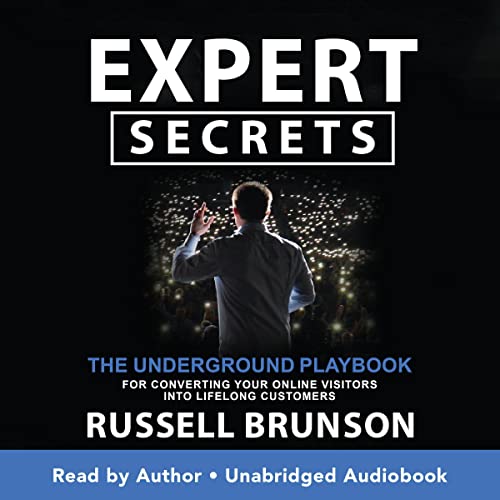
| Expert Secrets | Free Plus Shipping Book | Coaches, Trainers & Consultants | Turn your expertise into a profitable business | Free + Shipping |
| Traffic Secrets | Free Plus Shipping Book | Marketers & Business Owners | Learn sustainable traffic generation strategies | Free + Shipping |
| Secrets of Success Book Box | Free Plus Shipping | Personal Development Enthusiasts | Build success habits and entrepreneurial thinking | Free + Shipping |
| Perfect Webinar Secrets | Low-Ticket Training | Course Creators & Speakers | Use a proven webinar framework to increase conversions | $7 |
| PLR Funnels Masterclass | Training + Funnel Package | Beginners & Side Hustlers | Launch ready-made funnels without creating products from scratch | Paid |
| Course Secrets | Premium Course | Coaches & Experts | Create and sell online courses at scale, Want to know the secret to launching your offer fast? Curious about the fastest way to start generating revenue? Need help carving the perfect offer? | Free Webinar |
| Funnel Hacking Secrets Webinar | Free Webinar + Upsell | Agencies & Marketers | Learn how successful funnels are structured and optimised | Free Webclass |
| Funnel Hacking Secrets Bundle | Premium Programme | Serious Entrepreneurs | Funnel software, training and traffic strategies in one package | Premium $1,970 |
| Funnel Builder Secrets | High-Ticket Programme | Business Owners Ready to Scale | Software, training, templates and advanced funnel resources | High Ticket |
| ClickFunnels 3 months Discount Offer | Software Offer | Business Owners | Save on professional funnel software while building your business | Discounted |
| ClickFunnels Scale Plan | Premium Software | Growing Businesses | Advanced funnel building, automation and scaling tools | Monthly Subscription |
What Are the Main Parts of a ClickFunnels Funnel?
A ClickFunnels funnel can contain different pages depending on your objective. However, several page types appear repeatedly.
Landing Page
The landing page is often the first page a visitor sees after clicking an advertisement, email or promotional link.
Its purpose should be clear.
For example:
Download the Free Guide
or:
Register for the Free Webinar
A good landing page normally avoids unnecessary distractions and focuses the visitor on one primary action.
Opt-In Page
An opt-in page collects information from a visitor, commonly an email address.
For example:
Headline: Get the Free 20-Page Marketing Guide
Description: Learn five practical strategies for generating more leads.
Form: Name + Email
Button: Get My Free Guide
Once the visitor submits the form, ClickFunnels can trigger the next stage of the journey depending on your configuration.
Sales Page
A sales page explains why someone should purchase an offer.
A good sales page can contain:
- A compelling headline
- The customer’s problem
- The proposed solution
- Benefits
- Features
- Testimonials
- Demonstrations
- Frequently asked questions
- Guarantee information where applicable
- Call-to-action buttons
For example, a course sales page might explain the problem that the course solves, demonstrate what students will learn and show what is included before presenting the price.
Checkout Page
The checkout page is where the customer completes the transaction.
Depending on the offer and configuration, it can present information such as:
- Product
- Price
- Customer details
- Payment information
- Order options
- Additional offers
Checkout optimisation is important because a visitor who reaches checkout has already demonstrated significant purchase intent.
Thank-You Page
After a conversion, the visitor can be directed to a thank-you page.
This page could:
- Confirm the purchase
- Provide instructions
- Provide access information
- Introduce the next step
- Encourage another appropriate action
For example, after someone purchases a course, the thank-you page could explain how to access the course.
What Are Order Bumps?
An order bump is an additional offer presented during the checkout process.
Imagine that a customer is purchasing a $97 online course.
The checkout page could offer:
Add the downloadable workbook for $17.
The customer can accept the additional item without going through an entirely separate buying process.
Order bumps are useful because they can increase the average order value.
For example:
100 customers × $97 = $9,700
If 30 customers additionally purchase a $17 order bump:
30 × $17 = $510
The total becomes:
$10,210
The important point is that you should make the additional offer genuinely relevant. An unrelated order bump can create confusion rather than improving the customer experience.

Learn how to build a passive income empire by sharing the book you love. Understand the Dotcom Secrets Affiliate Commission Structure and join the affiliate program for FREE. [Get the FREE breakdown. At the footer]
What Are Upsells?
An upsell is an additional offer presented after a customer has accepted an initial offer.
For example:
Main product: $97
↓
Advanced programme: $197
The customer may choose to accept or decline the second offer.
A common example is an online education business selling a basic course and subsequently offering an advanced course. Another example is a consultant selling a basic service package before presenting a premium package with additional support.
The purpose of an upsell is to increase the value generated from an existing customer rather than requiring the business to acquire another customer.
What Are Downsells?
A downsell is generally a lower-priced or modified alternative presented when a customer declines a higher-priced offer.
For example:
Premium programme: $500
↓
Customer declines
↓
Starter programme: $197
This does not mean every customer should receive multiple offers. The strategy should remain relevant and transparent.
A good funnel gives people appropriate choices rather than continuously pressuring them.
What Is a ClickFunnels Funnel Step?
A funnel step is an individual stage or page within your customer journey.
For example:
- Landing page
- Opt-in page
- Sales page
- Checkout page
- Upsell page
- Thank-you page
Each step has a purpose.
The mistake beginners often make is adding pages simply because the software allows them to. More pages do not automatically create better funnels.
For a simple product, three or four well-designed steps may be more effective than ten unnecessary pages.

You are burning your ad spend on low-quality affiliate offers that fail to convert and offer zero backend continuity. Imagine promoting a legendary, high-converting funnel that pays you massive upfront commissions whilst building a predictable stream of recurring monthly wealth. Partner with a legacy brand. Register on the Think and Grow Rich JV Affiliate Sign Up Page today and start promoting the most lucrative ecosystem of the year.
How to Create Your First ClickFunnels Funnel
Creating your first funnel becomes much easier if you start with the customer journey rather than the software interface.
Step 1: Decide What You Are Selling
Before opening the funnel builder, identify your offer.
It could be:
- A physical product
- Digital product
- Course
- Coaching programme
- Consulting service
- Membership
- Webinar
- Appointment
- Free resource
For example, if you are a marketing consultant, your offer could be a $100 website audit.
Step 2: Identify Your Target Customer
Do not create a funnel for “everyone”.
Instead, identify a specific audience.
For example:
Small businesses that need better websites.
You could make the audience even more specific:
Zimbabwean small businesses that need professional WordPress websites.
The more clearly you understand your audience, the easier it becomes to write relevant copy.
Step 3: Choose the Funnel Objective
Your funnel should have one primary objective.
Examples include:
Generate a lead
Book an appointment
Sell a product
Register for a webinar
Sell a course
Start a trial
If your funnel attempts to accomplish five unrelated objectives simultaneously, visitors may become confused.
Step 4: Build the First Page
Create the page that matches your objective.
For a lead-generation campaign, this could be an opt-in page.
For an ecommerce campaign, it could be a product page.
For a coaching business, it could be an application page.
Step 5: Create the Conversion Step
Next, determine what happens after the visitor takes the desired action.
A lead might reach a thank-you page.
A customer might reach checkout.
A webinar registrant might reach a confirmation page.
The journey should feel logical.
Step 6: Add Follow-Up
This is where your funnel becomes more powerful.
Suppose somebody downloads your free guide.
You could send a series of educational emails that:
- Deliver the promised resource.
- Explain the problem further.
- Provide a useful solution.
- Share a relevant case study.
- Introduce your paid offer.
This allows the relationship to develop instead of expecting someone to buy immediately.
How to Write Effective ClickFunnels Copy
A funnel is not successful simply because the pages look attractive.
The words matter enormously.
I recommend thinking about four questions:
- Who is this for?
- What problem does the customer have?
- What outcome do they want?
- Why should they trust this offer?
For example, compare:
Buy Our Marketing Course
with:
Learn How to Generate Your First 100 Qualified Leads Without Increasing Your Advertising Budget.
The second statement communicates a clearer potential outcome.
However, you should never promise an outcome that your product cannot realistically deliver.
Good funnel copy should be persuasive and truthful.
How to Create a Good ClickFunnels Landing Page
A strong landing page normally has a clear relationship between the visitor’s expectation and the page content.
If an advertisement promises:
Free Website Audit
the landing page should immediately reinforce:
Get Your Free Website Audit
not:
Welcome to Our Company Website.
This principle is often called message matching.
For example, an advertisement for a free ebook should lead to a page that clearly presents that ebook. Similarly, an advertisement for a webinar should lead to a registration page focused on that webinar.
The less mental effort required to understand the page, the easier it becomes for visitors to decide what to do next.
How to Improve ClickFunnels Conversion Rates
There is no universal conversion rate that every ClickFunnels funnel should achieve. Your results depend on your traffic source, audience, offer, price, market, page quality, trust and many other factors.
However, several principles can improve your chances.
Use One Clear Call to Action
If you want someone to register for a webinar, make registration the primary action.
Match the Offer to the Audience
A free marketing guide may attract business owners, whereas a technical programming guide may attract developers.
Reduce Unnecessary Friction
Do not request twenty pieces of information when you only need an email address.
Test Your Pages
A/B testing can help you compare different versions of a page.
For example, you could test:
Headline A: Build Your First Sales Funnel
against:
Headline B: Turn More Website Visitors Into Customers
The objective is to discover which version produces better results with comparable traffic.

Traditional marketing methods often produce inconsistent results. Imagine transforming your marketing approach into a predictable system. Challenge Secrets Masterclass introduces modern digital marketing transformation.
Learn More About Sales Funnels
What Is ClickFunnels Automation?
Automation allows certain actions to happen automatically when predefined conditions are met.
For example:
Visitor submits form
↓
Add contact
↓
Send email
↓
Wait
↓
Send another email
↓
Notify sales representative
Another example could be:
Customer purchases product
↓
Send confirmation
↓
Grant access
↓
Send onboarding message
↓
Present relevant next step
Automation becomes increasingly valuable as your business grows because manually performing repetitive tasks does not scale efficiently.
ClickFunnels and Email Marketing
Email marketing can be an important part of a funnel because many visitors are not ready to buy during their first interaction.
Imagine that 1,000 people visit your landing page.
Perhaps only a portion purchase immediately.
If you collect permission to communicate with the remaining qualified prospects, you can continue providing useful information.
A basic sequence could be:
Day 1: Deliver the free resource.
Day 2: Explain the problem.
Day 4: Provide a useful strategy.
Day 6: Share a case study.
Day 8: Present your offer.
This is fundamentally different from repeatedly sending the same sales message.
The best email sequences provide value while naturally moving the prospect towards a relevant decision.
ClickFunnels and Customer Relationship Management
Customer relationship management involves storing and managing information about prospects and customers.
For example, you may want to know:
- Who became a lead?
- Which product did they purchase?
- When did they purchase?
- What funnel did they enter?
- Which offers did they accept?
- What should happen next?
ClickFunnels can participate in this process, although businesses with sophisticated customer relationship management requirements may choose to integrate it with a dedicated customer relationship management platform.
This is one reason you may encounter comparisons such as ClickFunnels vs HubSpot, ClickFunnels vs GoHighLevel and ClickFunnels vs ActiveCampaign.
ClickFunnels Integrations
You do not necessarily have to operate ClickFunnels in isolation.
Depending on your requirements and available connectors, you can connect it with other platforms for functions such as:
- Email marketing
- Customer relationship management
- Payments
- Automation
- Analytics
- Webinars
- Scheduling
- Customer management
- External databases
For example, you might connect ClickFunnels to an email marketing platform so that a new lead automatically enters an appropriate email sequence.
You could also connect your funnel to an automation platform and trigger another application when a customer makes a purchase.
This creates a broader technology ecosystem around your funnel.
ClickFunnels and Zapier
Automation platforms can connect ClickFunnels with other applications.
For example:
ClickFunnels lead
↓
Automation platform
↓
Google Sheets
Another workflow might be:
ClickFunnels purchase
↓
Automation platform
↓
Customer relationship management system
The exact integration method depends on the current capabilities of ClickFunnels and the external application.
ClickFunnels and n8n
n8n is another automation option that can be useful for businesses wanting more flexible workflows.
A conceptual workflow could look like:
ClickFunnels
↓
Webhook
↓
n8n
↓
Customer relationship management system
↓
Email platform
↓
Notification
This can be particularly useful when your automation requirements become more sophisticated.

Businesses struggle to manage workflows across different platforms. Imagine automating tasks across all your platforms simultaneously. Hostinger n8n connects multiple platforms into one automation system.
Hostinger n8n
ClickFunnels for Ecommerce
ClickFunnels can be used for ecommerce campaigns where the objective is to guide visitors through a focused buying journey.
For example:
Advertisement
↓
Product Funnel
↓
Checkout
↓
Order Bump
↓
Upsell
This approach is different from a conventional online shop where visitors browse dozens or thousands of products.
A focused funnel can be particularly useful when you are promoting a specific product, promotional campaign or product bundle.
However, businesses with complex inventory, shipping and catalogue requirements may need a dedicated ecommerce platform alongside or instead of ClickFunnels.
ClickFunnels for Online Courses
Online educators can use funnels to sell courses.
A typical course funnel could be:
Free lesson
↓
Email capture
↓
Educational emails
↓
Course sales page
↓
Checkout
↓
Course access
↓
Advanced offer
For example, you could offer a free lesson explaining how to create a basic sales funnel and then introduce a complete paid ClickFunnels training course.
The funnel gives prospective students an opportunity to understand your teaching style before purchasing.
ClickFunnels for Coaches
Coaches can use funnels to generate applications and consultations.
For example:
Social media post
↓
Free training
↓
Application
↓
Strategy call
↓
Coaching programme
This model is especially relevant for high-ticket coaching because a prospective customer may need considerable information and trust before making a purchasing decision.
A coach could also use a lower-priced digital product to introduce people to their methodology before offering a premium coaching service.
ClickFunnels for Real Estate
Real estate professionals can use funnels to generate enquiries.
For example:
Property advertisement
↓
Property landing page
↓
Enquiry form
↓
Viewing appointment
↓
Property purchase
Another possibility is a lead magnet:
Free Property Buyer’s Guide
↓
Email Capture
↓
Property Recommendations
↓
Viewing
This allows the agent to build a database rather than relying entirely on individual advertising interactions.
ClickFunnels for Webinars
Webinar funnels typically contain several stages.
A basic structure is:
Advertisement
↓
Registration
↓
Confirmation
↓
Reminder
↓
Webinar
↓
Offer
↓
Checkout
The advantage of this structure is that registration and attendance can be treated as distinct stages.
For example, someone who registers but does not attend may require different follow-up from someone who attends the entire webinar.

Get direct access to the strategies that built a software empire. This is the closest you can get to personal coaching from Russell, completely FREE during this special 30-day event. [Start learning for FREE.]
ClickFunnels for Service Businesses
Service businesses can use ClickFunnels without necessarily selling directly through checkout.
For example, a web design company could create:
Free Website Assessment
↓
Lead Form
↓
Qualification
↓
Consultation
↓
Proposal
↓
Website Project
A search engine optimisation agency could offer a free website audit.
A business consultant could offer a free strategy session.
The funnel therefore becomes a lead-generation and qualification system rather than simply an ecommerce checkout.
ClickFunnels vs a Traditional Website
A traditional website and a sales funnel serve different purposes.
A website might contain:
- Home
- About
- Services
- Blog
- Contact
- Products
Visitors can explore freely.
A funnel usually has a more controlled journey:
Landing Page
↓
Offer
↓
Checkout
The website is therefore often designed for exploration, credibility and broad information, while the funnel is designed around a specific conversion objective.
You do not necessarily need to choose one.
A business can use:
Website + ClickFunnels
For example, your website can attract organic search traffic through educational content while ClickFunnels handles specific promotional campaigns.
ClickFunnels vs WordPress
WordPress and ClickFunnels are also not direct equivalents.
WordPress is a content management system that can be used to build websites, blogs, ecommerce stores and many other types of online properties.
ClickFunnels is much more focused on marketing funnels and conversion journeys.
A business might therefore use WordPress for:
SEO + Blog + Website
and ClickFunnels for:
Advertising + Sales Funnels + Conversion
This hybrid model can be powerful because each platform performs a different role.

Losing visitors because your WordPress site keeps going offline, imagine a reliable hosting service that keeps your website live around the clock, Hostinger Managed WordPress Hosting guarantees stable uptime and performance.
ClickFunnels vs Shopify
Shopify is primarily an ecommerce platform, whereas ClickFunnels focuses more heavily on sales funnels and conversion journeys.
If your business needs a large online product catalogue, inventory management and traditional ecommerce functionality, Shopify may be more appropriate.
If you are selling a smaller number of products through highly focused promotional funnels, ClickFunnels may be more attractive.
The two can also potentially work together depending on your technology stack.
ClickFunnels vs HubSpot
HubSpot is a broad customer relationship management, marketing, sales and customer-service platform.
ClickFunnels is more strongly associated with sales funnels and online conversion.
Therefore:
ClickFunnels: Stronger focus on sales funnels, checkout and direct-response selling.
HubSpot: Stronger focus on customer relationship management, marketing automation, sales pipelines and customer lifecycle management.
Neither is automatically better.
The appropriate platform depends on the business model.
ClickFunnels vs GoHighLevel
GoHighLevel is particularly popular among agencies and businesses looking for an integrated customer relationship management, marketing automation and client-management platform.
ClickFunnels is particularly strong for funnel creation and direct-response marketing.
If you are a funnel-focused entrepreneur, ClickFunnels may be more appealing.
If you run an agency managing multiple client accounts and need extensive customer relationship management and automation capabilities, GoHighLevel may be worth considering.
Is ClickFunnels Good for Beginners?
Yes, ClickFunnels can be suitable for beginners, particularly if you approach it with a clear understanding of sales funnels.
However, there is an important distinction:
Learning the software is not the same as learning marketing.
You can learn how to drag elements onto a page relatively quickly.
Understanding:
- Target audiences
- Offers
- Positioning
- Copywriting
- Traffic
- Lead generation
- Conversion optimisation
- Customer psychology
- Follow-up
takes considerably longer.
For example, a beautifully designed funnel can still fail if it promotes an irrelevant product to the wrong audience.
Conversely, a relatively simple funnel can perform well when it presents the right offer to the right audience at the right time.
How Much Does ClickFunnels Cost?
ClickFunnels operates on paid plans, with pricing and included features subject to change.
You should therefore check the current official pricing before purchasing because subscription structures, features, limits and promotional offers can change.
When evaluating the cost, do not look only at the monthly subscription.
Also consider:
- Number of funnels required
- Number of contacts
- Email requirements
- Automation requirements
- Team members
- Integrations
- Payment processing
- Additional software
- Advertising costs
A funnel platform is only one component of the total cost of operating an online marketing campaign.

High costs discourage many entrepreneurs from building sales funnels. Imagine creating professional funnels within a manageable budget. ClickFunnels Discount offers cost-effective funnel building solutions.
Learn More About Sales Funnels
Is There a Free ClickFunnels Plan?
ClickFunnels has historically offered trial and promotional access options, but the availability and terms of such offers can change.
Therefore, I recommend checking the current official ClickFunnels website rather than relying on an old article claiming that a particular free trial or promotional offer is permanently available.
This is an important principle for evergreen content: software pricing and promotions should always be verified before publication or updating an article.
Is ClickFunnels Worth It?
Whether ClickFunnels is worth the cost depends on whether you will actually use its funnel-building and marketing capabilities.
It can make sense for someone who:
- Sells digital products
- Runs paid advertising
- Sells online courses
- Runs coaching programmes
- Hosts webinars
- Generates leads
- Sells services
- Needs conversion-focused checkout experiences
- Wants to automate parts of the customer journey
It may make less sense for someone who simply needs a basic five-page company website.
For example, a local business that only needs:
Home + About + Services + Contact
probably does not need a specialised sales-funnel platform as its primary website solution.
Conversely, a business spending thousands on advertising and needing to convert those visitors into leads and customers may benefit substantially from dedicated funnel infrastructure.
Common ClickFunnels Mistakes Beginners Make
Mistake 1: Building the Funnel Before Defining the Offer
A funnel cannot rescue a weak offer.
Before designing pages, understand exactly what you are selling and why someone should want it.
Mistake 2: Sending Everyone to the Same Funnel
Different audiences often have different needs.
A coach might create separate funnels for:
- Beginners
- Advanced clients
- Corporate clients
This can produce more relevant experiences than putting everyone into one generic funnel.
Mistake 3: Making the Funnel Too Complicated
More pages do not automatically mean more conversions.
If a simple product requires:
Landing Page → Checkout → Thank You
do not add seven unnecessary stages.
Mistake 4: Ignoring Mobile Visitors
Many visitors access websites through smartphones.
Your pages should therefore be checked on smaller screens.
A page that looks excellent on a desktop computer can become difficult to use on a phone if buttons, text or forms are poorly configured.
Mistake 5: Focusing Only on Design
A beautiful page with a weak message can perform worse than a simple page with compelling copy.
Design should support the offer rather than hide it.
Mistake 6: Forgetting Follow-Up
One of the biggest missed opportunities is capturing a lead and then doing nothing with it.
If someone voluntarily gives you their email address, you should have a relevant follow-up strategy.
ClickFunnels Funnel Metrics You Should Understand
If you want to become proficient with ClickFunnels, learn to analyse your numbers.
Important metrics can include:
Traffic
How many people entered the funnel?
Conversion Rate
What percentage completed the desired action?
Cost Per Lead
How much did it cost to acquire a lead?
Cost Per Acquisition
How much did it cost to acquire a customer?
Average Order Value
How much revenue does the average customer generate?
Customer Lifetime Value
How much revenue does the average customer generate over the entire relationship?
Return on Advertising Spend
How much revenue does your advertising generate relative to your advertising expenditure?
These metrics allow you to diagnose problems.
For example, if your landing page converts poorly, the problem may be the message, offer or audience.
If your landing page performs well but checkout conversions are poor, the problem may occur later in the funnel.
A Simple ClickFunnels Example
Suppose I sell an online marketing course for $100.
I create this funnel:
Facebook Advertisement
↓
Free Marketing Guide
↓
Email Capture
↓
Five-Day Email Sequence
↓
Course Sales Page
↓
$100 Course
↓
$20 Order Bump
↓
$200 Advanced Course
Suppose 10,000 people see the advertisement.
Perhaps 500 become leads.
Suppose 50 purchase the $100 course.
That produces:
50 × $100 = $5,000
If 15 customers purchase the $20 order bump:
15 × $20 = $300
If five customers purchase the $200 advanced course:
5 × $200 = $1,000
The total revenue becomes:
$6,300
This example is illustrative rather than a prediction of what any particular funnel will achieve. Actual results depend on traffic quality, offer, pricing, audience, copy, trust, product quality and many other variables.
A More Advanced ClickFunnels Example
Now imagine a consulting business.
The funnel could be:
LinkedIn Content
↓
Free Business Growth Guide
↓
Lead Capture
↓
Email Education
↓
Free Strategy Session
↓
Qualification
↓
Consultation
↓
$2,500 Consulting Package
↓
$5,000 Premium Package
The funnel is no longer simply selling a product.
It is helping the business move prospects through different stages of awareness, qualification and purchase.
This is one of the reasons funnels can be useful for service businesses and high-value offers.
How to Learn ClickFunnels Effectively
If you are completely new to ClickFunnels, I recommend learning it in this order:
Stage 1: Learn sales funnels
Understand:
- Traffic
- Leads
- Offers
- Conversion
- Follow-up
Stage 2: Learn the ClickFunnels interface
Understand:
- Funnels
- Steps
- Pages
- Elements
- Settings
Stage 3: Build one simple funnel
Do not start with a complicated ten-step funnel.
Build:
Landing Page → Checkout → Thank You
or:
Landing Page → Lead Capture → Thank You
Stage 4: Add email follow-up
Create a simple sequence for new leads.
Stage 5: Learn analytics
Understand where people leave the funnel.
Stage 6: Optimise
Test:
- Headlines
- Offers
- Calls to action
- Page layouts
- Forms
- Pricing
- Follow-up
Stage 7: Add advanced features
Only after understanding the basics should you explore:
- Upsells
- Downsells
- Order bumps
- Automation
- Integrations
- A/B testing
- Advanced segmentation
This progression prevents beginners from becoming overwhelmed.

Unlock a massive vault of exclusive FREE PLR Funnels when you attend this limited-time masterclass.
ClickFunnels 101: Frequently Asked Questions
What is ClickFunnels in simple terms?
ClickFunnels is a platform that helps businesses create and manage sales funnels designed to turn visitors into leads and customers.
Is ClickFunnels a website builder?
ClickFunnels can be used to create web pages and online experiences, but its primary purpose is more specialised than a conventional website builder. It focuses heavily on marketing funnels and conversions.
Do I need a website to use ClickFunnels?
Not necessarily. You can use ClickFunnels to create funnel pages without first building a traditional website. However, many businesses benefit from having both a website and specialised funnels.
Can ClickFunnels collect leads?
Yes. Lead generation is one of the fundamental uses of a sales funnel.
Can ClickFunnels sell products?
Yes. ClickFunnels can be used for online selling and checkout experiences.
Can ClickFunnels sell digital products?
Yes. Digital products are a natural use case for funnel-based marketing.
Can ClickFunnels sell online courses?
Yes. ClickFunnels can support course-related sales and delivery experiences.
Can ClickFunnels be used for coaching?
Yes. Coaches can use it to generate leads, applications, consultations and programme sales.
Can ClickFunnels be used for ecommerce?
Yes. It can be used to create focused ecommerce sales funnels, although businesses with extensive catalogues and complex inventory requirements may require dedicated ecommerce software.
Can ClickFunnels be used for webinars?
Yes. Webinar registration and promotional funnels are common funnel use cases.
Can ClickFunnels send emails?
ClickFunnels includes email and marketing functionality, although the exact capabilities available to you depend on your current plan and product configuration.
Can ClickFunnels integrate with other software?
Yes. ClickFunnels can connect with other applications through available integrations, automation tools, webhooks and other connection methods.
Is ClickFunnels good for beginners?
It can be, particularly for people who want to learn sales funnels and online conversion. However, learning marketing strategy is just as important as learning the software.
Is ClickFunnels good for small businesses?
It can be useful for small businesses that need lead generation, online selling, appointment generation or focused promotional funnels.
Is ClickFunnels an email marketing platform?
It includes email marketing capabilities, but it is broader than a traditional standalone email marketing service because its central concept revolves around funnels and customer conversion.
Is ClickFunnels a customer relationship management system?
ClickFunnels includes customer relationship management functionality, although businesses with sophisticated customer relationship management requirements may compare it with dedicated platforms such as HubSpot or GoHighLevel.
Can ClickFunnels replace WordPress?
Not necessarily. ClickFunnels and WordPress solve different problems. WordPress is a flexible content management system, while ClickFunnels is focused heavily on funnels and conversion.
Can ClickFunnels replace Shopify?
For some funnel-driven ecommerce businesses, ClickFunnels may fulfil important selling requirements. However, Shopify is designed primarily as an ecommerce platform, so the two should not be treated as identical products.
Is ClickFunnels worth paying for?
It can be worthwhile when the features directly support your marketing and sales model. If you only need a basic informational website, there may be simpler and less specialised options.
Final Verdict: Is ClickFunnels Right for You?
ClickFunnels becomes much easier to understand when you stop thinking of it as merely a page builder and start thinking about it as a customer-journey and conversion platform.
The basic principle is straightforward:
Attract the right people.
↓
Give them a relevant reason to engage.
↓
Capture or qualify them.
↓
Present an appropriate offer.
↓
Make the buying process straightforward.
↓
Follow up.
↓
Build the customer relationship.
That is the foundation of funnel marketing.
If you are selling an online course, you might use a free lesson to introduce prospects to your teaching before offering the complete course. If you are a consultant, you might use a free guide to generate leads before offering a strategy session. If you are an ecommerce marketer, you might use a product funnel to present one compelling offer before introducing an appropriate complementary product.
The software itself, however, is only part of the equation.
ClickFunnels cannot compensate for a poor product, an irrelevant offer, the wrong audience or inadequate traffic. A technically perfect funnel can fail if nobody wants what you are selling. Conversely, a relatively simple funnel can perform extremely well when the audience, offer, message and timing are aligned.
Therefore, if you are learning ClickFunnels for the first time, do not try to master every feature immediately. Start by understanding sales funnels, customer journeys, offers, landing pages, conversion and follow-up. Then build one simple funnel, measure what happens and improve it based on evidence.
Once you understand those fundamentals, more advanced subjects such as ClickFunnels integrations, automation, A/B testing, upsells, order bumps, email marketing, traffic generation and conversion optimisation become much easier to understand.
Most importantly, remember that the objective is not to build the most complicated funnel.
The objective is to build the simplest customer journey that effectively helps the right prospect move towards the right action.
That is the real foundation of ClickFunnels 101.
You keep buying digital courses that sit idle on your hard drive, failing to inspire the massive action required to reach the top. Imagine receiving a premium, physical treasure chest of success tools that instantly transforms your environment and forces you to level up. See exactly what elite operators use to anchor their success during the How To Get Anything You Want Unboxing Event, the perfect primer before joining the 1357 Success Club.

Affiliate Disclosure – To keep this website running, some links in this article are affiliate links that may earn me a commission – at no additional cost to you.