How to Set Up Funnels That Convert | Beginner Funnel Guide with Hosting


Introduction: Why Funnels Convert While Websites Fail
If you are struggling to turn website visitors into leads or paying customers, you are not alone. Many beginners, bloggers, entrepreneurs, and small businesses invest in websites, content, and advertising, yet still experience poor results. Although traffic may increase, sales often remain inconsistent. As a result, frustration grows, and many assume the problem lies with their product or service. However, in most cases, the real issue is the absence of a properly structured sales funnel.
A sales funnel is not simply a marketing trend. It is a proven system that guides your visitors step by step towards a specific outcome. In contrast to traditional websites, funnels are designed to eliminate distractions and focus attention on conversion. Given that online users make decisions quickly, funnels provide clarity, direction, and psychological alignment. Accordingly, businesses that use funnels often experience significantly higher conversion rates and improved return on investment.
In this beginner’s guide, you will learn who funnels are for, what a funnel really is, why funnels outperform websites, when to start using funnels, and most importantly how to set up funnels that convert using reliable web hosting and industry-leading funnel builders. Additionally, you will discover how Hostinger, ClickFunnels, and LeadPages compare, and how you can combine them strategically for maximum performance, speed, reliability, and value.
- Introduction: Why Funnels Convert While Websites Fail
- Who Should Use Sales Funnels?
- What Is a Sales Funnel?
- Why Funnels Convert Better Than Traditional Websites
- When Should You Start Using Funnels?
- How to Set Up Funnels That Convert: Step-by-Step Beginner Guide
- Step One: Choose the Best Web Hosting for Funnels
- Step Two: Define One Clear Funnel Objective
- Step Three: Select the Right Funnel Builder (ClickFunnels or LeadPages)
- Step Four: Hosting Funnels on Hostinger with ClickFunnels or LeadPages
- Step Five: Create High-Converting Landing Pages
- Step Six: Capture Leads and Automate Follow-Ups
- Step Seven: Track, Test, and Optimise for Higher Conversions
- ClickFunnels vs LeadPages: Feature Comparison
Who Should Use Sales Funnels?
Sales funnels are suitable for almost anyone operating online. Beginners launching their first digital project benefit from funnels because they provide structure and clarity from the start. Bloggers and content creators use funnels to turn readers into email subscribers and long-term audiences. Entrepreneurs and small businesses rely on funnels to generate leads, sell services, and automate follow-ups. Developers and agencies use funnels to onboard clients and showcase offers efficiently.
In addition, funnels are particularly valuable for those operating with limited time or resources. Automation reduces manual work, while data tracking allows informed decision-making. Instead of guessing what works, you measure performance at every stage. Accordingly, funnels create predictability in environments that are often chaotic and competitive.
However, some critics argue that funnels feel aggressive or manipulative. Although this can be true when poorly designed, ethical funnels prioritise value, education, and relevance. When built correctly, funnels enhance user experience by helping people make informed decisions. Hence, funnels are not about pressure but about guidance.
What Is a Sales Funnel?
A sales funnel is a structured journey that moves a visitor from initial awareness to final action. Each stage of the funnel serves a specific purpose, and every page, message, and email is aligned with a single goal. Unlike a traditional website, where users can wander aimlessly, a funnel controls the flow of attention.
Typically, a funnel includes a landing page, an email capture mechanism, a follow-up sequence, and an offer. For example, a visitor may arrive on a landing page offering a free guide. In exchange for their email address, they receive the resource. Over time, automated emails educate them and introduce a paid solution. As a result, trust is built gradually rather than forced instantly.
It is important to note that funnels are not limited to selling products. Funnels can be used to book consultations, register webinar attendees, grow email lists, or onboard customers. The power of a funnel lies in its adaptability and measurability. Every element can be tested, improved, and scaled.
Get your copy of DotCom Secrets here
| Offer | Type | Best For | Key Benefit | Investment |
| One Funnel Away Challenge | Free Training | Beginners, Coaches, E-commerce Sellers | Build and launch your first sales funnel with step-by-step guidance | Free |
| Sales Funnels Webinar | Free Webinar | Entrepreneurs & Small Business Owners | Learn the sales funnel strategies used by successful online businesses | Free |
| Five Day Lead Challenge | Free Challenge | Service Providers & Marketers | Generate more leads and build your email list faster | Free |
| AI Webinar Funnel Builder | Free Training + Tool | Coaches, Consultants & Experts | Create a webinar funnel using Artificial Intelligence in minutes | Free |
| The Last Secret | Free Training | Agencies & Entrepreneurs | Learn how to launch a Software-as-a-Service business model | Free |
| ClickFunnels Free Trial | Free Software Trial | Funnel Builders & Businesses | Build funnels, websites and automations risk-free | Free Trial |
| DotCom Secrets | Free Plus Shipping Book | Entrepreneurs & Beginners | Learn the foundations of online sales funnels and customer value ladders | Free + Shipping |
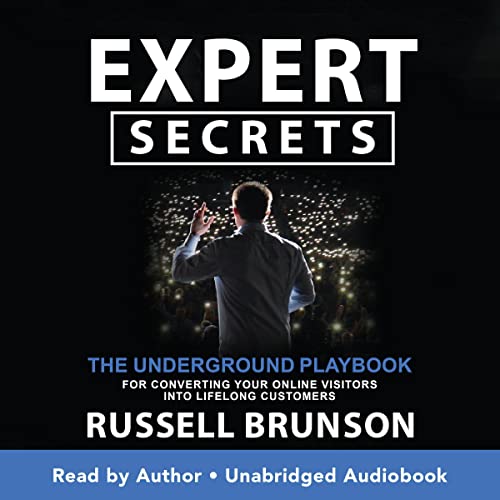
| Expert Secrets | Free Plus Shipping Book | Coaches, Trainers & Consultants | Turn your expertise into a profitable business | Free + Shipping |
| Traffic Secrets | Free Plus Shipping Book | Marketers & Business Owners | Learn sustainable traffic generation strategies | Free + Shipping |
| Secrets of Success Book Box | Free Plus Shipping | Personal Development Enthusiasts | Build success habits and entrepreneurial thinking | Free + Shipping |
| Perfect Webinar Secrets | Low-Ticket Training | Course Creators & Speakers | Use a proven webinar framework to increase conversions | $7 |
| PLR Funnels Masterclass | Training + Funnel Package | Beginners & Side Hustlers | Launch ready-made funnels without creating products from scratch | Paid |
| Course Secrets | Premium Course | Coaches & Experts | Create and sell online courses at scale, Want to know the secret to launching your offer fast? Curious about the fastest way to start generating revenue? Need help carving the perfect offer? | Free Webinar |
| Funnel Hacking Secrets Webinar | Free Webinar + Upsell | Agencies & Marketers | Learn how successful funnels are structured and optimised | Free Webclass |
| Funnel Hacking Secrets Bundle | Premium Programme | Serious Entrepreneurs | Funnel software, training and traffic strategies in one package | Premium $1,970 |
| Funnel Builder Secrets | High-Ticket Programme | Business Owners Ready to Scale | Software, training, templates and advanced funnel resources | High Ticket |
| ClickFunnels 3 months Discount Offer | Software Offer | Business Owners | Save on professional funnel software while building your business | Discounted |
| ClickFunnels Scale Plan | Premium Software | Growing Businesses | Advanced funnel building, automation and scaling tools | Monthly Subscription |
Why Funnels Convert Better Than Traditional Websites
Traditional websites are designed to inform broadly, while funnels are designed to convert specifically. This distinction explains why funnels consistently outperform websites in lead generation and sales. Websites often overwhelm visitors with too many choices, leading to indecision. Funnels remove unnecessary options and focus attention on one clear action.
Additionally, funnels allow personalisation and behavioural targeting. Instead of treating all visitors the same, you can deliver messages based on actions taken. For example, someone who clicks an email link receives different content from someone who ignores it. As a result, communication becomes more relevant and effective.
Although websites remain important for credibility and search visibility, funnels are where conversions happen. Given that page speed, uptime, and reliability directly affect funnel performance, choosing the best web hosting provider is critical. Slow or unreliable hosting can destroy conversion rates, regardless of how well a funnel is designed.

E-commerce is evolving. Learn how to use funnels to sell your physical products more effectively than a traditional store. Start the 30 Day One Funnel Away Challenge for FREE today. [Start the FREE e-comm challenge.]
When Should You Start Using Funnels?
Many beginners delay funnel creation because they believe they need more traffic, more content, or more experience. However, funnels should be implemented as early as possible. Even with minimal traffic, funnels help you test messaging, offers, and audience interest. Accordingly, funnels reduce wasted effort and guide future decisions.
Starting early also allows you to build an email list from the beginning. Email marketing remains one of the most reliable and cost-effective digital channels. When combined with automated funnels, email becomes a long-term asset rather than a manual burden. Waiting too long often results in lost opportunities that cannot be recovered.
How to Set Up Funnels That Convert: Step-by-Step Beginner Guide
Step One: Choose the Best Web Hosting for Funnels
Before building any funnel, you must establish a reliable technical foundation. Your hosting provider affects page speed, uptime, security, and overall user experience. Accordingly, selecting the best hosting provider is not optional if you want funnels that convert.
Hostinger is widely recognised for offering affordable pricing, high performance, and beginner-friendly management tools. With fast servers, global data centres, and strong uptime guarantees, Hostinger ensures your funnel pages load quickly and remain accessible. Given that slow loading times reduce conversions significantly, hosting speed directly influences profitability.
In addition, Hostinger integrates seamlessly with WordPress, landing page builders, and external funnel tools. This flexibility allows you to host custom funnel pages, blog content, and integrations in one place. For beginners and small businesses, Hostinger provides excellent value without compromising reliability.

Feeling overwhelmed by technical hosting requirements, imagine learning and building your site on a simple and supportive platform, Hostinger offers beginner-friendly hosting perfect for students.
Step Two: Define One Clear Funnel Objective
Every funnel must have one primary goal. This could be collecting email leads, selling a product, booking calls, or registering webinar attendees. Trying to achieve multiple objectives in one funnel creates confusion and lowers conversion rates. Accordingly, clarity is essential.
For example, a beginner funnel might focus on offering a free resource in exchange for an email address. A more advanced funnel may promote a paid course or service after a nurturing sequence. By defining one goal, you can measure performance accurately and optimise effectively.
Step Three: Select the Right Funnel Builder (ClickFunnels or LeadPages)
Choosing the right funnel builder depends on your business goals, budget, and technical preferences. ClickFunnels and LeadPages are two of the most popular funnel and landing page platforms available.

Access the most advanced, high-ticket funnel training on the planet and master every aspect of the Funnel Builder Secrets curriculum. [Start the premium training.]
ClickFunnels Overview
ClickFunnels is an all-in-one sales funnel platform designed to build complete conversion systems. It includes landing pages, sales pages, shopping carts, email automation, membership areas, and affiliate management. As a result, ClickFunnels reduces the need for third-party tools.
ClickFunnels is particularly suitable for entrepreneurs selling digital products, courses, coaching, or services. Its drag-and-drop editor allows beginners to create complex funnels without coding. Built-in analytics help you track performance and optimise results. Although pricing is higher, the platform replaces multiple tools, offering strong overall value.
LeadPages Overview
LeadPages is primarily a landing page builder focused on lead generation. It provides a large library of templates, pop-ups, and conversion tools. LeadPages integrates with many email marketing services and can be published on WordPress or custom domains.
LeadPages is ideal for beginners who want simple landing pages without complexity. However, advanced funnel functionality often requires additional third-party tools. As a result, total costs may increase over time.
Step Four: Hosting Funnels on Hostinger with ClickFunnels or LeadPages
Although ClickFunnels and LeadPages are hosted platforms, Hostinger plays a crucial role in a complete funnel ecosystem. Many businesses host their blogs, content hubs, and custom pages on Hostinger, while using ClickFunnels or LeadPages for conversion-focused pages.
For example, you can host educational blog content on a WordPress site powered by Hostinger. From there, you direct traffic to ClickFunnels or LeadPages funnels. This approach improves search engine visibility while maintaining high conversion rates. Additionally, custom domains hosted on Hostinger can be connected to funnel platforms for consistent branding.
Step Five: Create High-Converting Landing Pages
Landing pages are the entry point of your funnel. A high-converting landing page focuses on one promise, one problem, and one solution. Effective pages use clear headlines, benefit-driven copy, social proof, and strong calls to action.
Although design matters, clarity matters more. Beginners often overcomplicate layouts instead of focusing on messaging. Clean design, fast loading speed, and mobile optimisation are essential. Hosting content assets on reliable hosting ensures consistent performance.

You are trapped trading your precious time for money, hitting a painful income ceiling because you can only take on so many clients. Imagine decoupling your income from your time, selling your expertise to thousands of students worldwide, and achieving true financial freedom. Monetise the upgraded mindset you built in the Think and Grow Rich Challenge by claiming the Course Secrets Special to build your digital empire.
Step Six: Capture Leads and Automate Follow-Ups
Email marketing is the engine behind funnel profitability. Without follow-up, most visitors will never convert. Automated email sequences educate prospects, build trust, and present offers at the right time.
ClickFunnels includes built-in email automation, while LeadPages integrates with third-party email services. Hosting your email-related content and integrations alongside your website on Hostinger improves control and scalability. Over time, email automation transforms funnels into predictable revenue systems.

The fortune is in the follow-up! Learn how to automate your customer relationships with this FREE Follow-Up Funnels eBook. [Claim your FREE ebook.]
Step Seven: Track, Test, and Optimise for Higher Conversions
Funnels are never finished. Continuous testing and optimisation are essential for long-term success. Tracking open rates, click-through rates, and conversions reveals areas for improvement. Simple changes to headlines, layouts, or email timing can lead to significant gains.
Reliable hosting ensures that performance data reflects user behaviour rather than technical issues. Accordingly, optimisation efforts become more accurate and effective.
ClickFunnels vs LeadPages: Feature Comparison

| Feature | ClickFunnels | LeadPages |
| Funnel builder | Yes | Limited |
| Email automation | Built-in | External integration |
| Shopping cart | Included | External |
| Ease of use | Moderate | High |
| Pricing value | Higher cost, more features | Lower entry cost |
Frequently Asked Questions About Funnels and Hosting
What is the best hosting for funnels?
The best hosting provider offers speed, reliability, security, and scalability. Hostinger is widely regarded as one of the best options for beginners and small businesses due to its pricing and performance balance.
Can I use Hostinger with ClickFunnels?
Yes. You can host your main website, blog, and custom pages on Hostinger and connect your domain to ClickFunnels for funnel pages.
Is LeadPages cheaper than ClickFunnels?
LeadPages has a lower entry price, but additional tools may be required for full funnel functionality. ClickFunnels offers more features in one platform.
Are funnels better than websites for selling?
Funnels are more effective for conversions, while websites are better for information and branding. The best strategy combines both.
Conclusion: Build Funnels That Convert with the Right Tools
In conclusion, funnels are essential for anyone seeking consistent online growth. They provide structure, automation, and clarity that traditional websites cannot achieve alone. When supported by reliable web hosting, fast performance, and proven funnel builders, funnels become powerful assets rather than risky experiments.
By combining Hostinger for hosting, ClickFunnels for complete funnel systems, or LeadPages for focused lead generation, you can build a scalable, high-converting ecosystem tailored to your goals. If you are serious about increasing leads, sales, and long-term value, now is the time to build funnels that work for you.


