How to Start a Blog That Grows and Converts


Introduction: Why Starting a Blog Is Still One of the Smartest Online Moves You Can Make
Starting a blog is no longer just about writing opinions or sharing personal stories, although those elements still matter. In contrast, modern blogging is a powerful digital asset that can generate traffic, build authority, grow an email list, and create multiple income streams over time. Given that businesses, entrepreneurs, and creators increasingly rely on content marketing, learning how to set up a blog properly from the beginning gives you a strong competitive advantage.
Accordingly, this guide is designed to show you exactly how to set up a blog step by step using Hostinger, one of the best web hosting providers for beginners and growing websites. You will learn not only how to create a blog technically, but also how to structure it for search engines, user experience, and long-term growth. In addition, this article focuses on practical “how” steps while still explaining the “why” behind every decision you make.
Although many people start blogs using free platforms, that approach limits growth, branding, and monetisation. As a result, this guide focuses on using reliable paid web hosting that gives you full control, better speed, improved security, and long-term value. If you want a blog that can grow into a serious online business, you are in the right place.
Who This Guide Is For
This beginner’s guide is written for anyone who wants to start a blog the right way, regardless of technical background. If you are a beginner with no coding skills, you will find the steps easy to follow and clearly explained. Similarly, bloggers who previously used free blogging platforms will understand how to transition to professional hosting with minimal friction.
Entrepreneurs and small business owners will also benefit from this guide because a blog can support lead generation, sales funnels, and brand visibility. In addition, developers and marketers looking for affordable yet reliable hosting solutions will see why Hostinger offers excellent value compared to other hosting providers.
Ultimately, if you are searching for how to start a blog, best hosting for bloggers, cheap web hosting with good performance, or reliable WordPress hosting, this article is written with you in mind.
What You Need to Start a Blog Successfully

Without planning, daily goals are often unclear or ignored. Imagine starting each day with clear goals and direction. What’s Your Morning Routine App supports goal-focused mornings—join this program which is part of the Secrets of Success programs.
Before diving into the technical steps, it is important to understand the core components required to build a blog that performs well. First, you need a domain name, which acts as your blog’s unique online address. Secondly, you need web hosting, which stores your blog files and makes them accessible on the internet. Thirdly, you need a content management system, with WordPress being the most popular and beginner-friendly option.
In addition, you need a clear niche or topic focus so that your content attracts the right audience. Without a defined niche, it becomes difficult to rank in search engines or build loyal readership. Furthermore, you need a long-term mindset, because blogging success comes from consistency, quality content, and strategic promotion rather than quick wins.
Hostinger simplifies this entire process by combining affordable pricing, fast performance, and beginner-friendly tools in one platform. As a result, you can focus more on creating content and less on technical frustrations.
Why Hostinger Is an Excellent Choice for Blogging
Choosing the right hosting provider is one of the most important decisions you will make when starting a blog. Hostinger stands out because it balances affordability, performance, and usability, which is especially important for beginners. Unlike free blogging platforms, Hostinger gives you full ownership of your website and content.
In addition, Hostinger offers optimised WordPress hosting, fast servers, global data centres, and strong security features. As a result, your blog loads quickly, remains stable during traffic spikes, and provides a better user experience. Search engines favour fast and secure websites, which directly supports your search engine optimisation efforts.
Another key advantage is value for money. When compared to many other hosting providers, Hostinger delivers competitive pricing without sacrificing essential features. This makes it one of the best cheap hosting options for bloggers who still want professional performance.
When Should You Start a Blog?
There is no perfect time to start a blog, but delaying often leads to missed opportunities. Given that content compounds over time, the earlier you start, the sooner you can build authority and traffic. Even if you feel unprepared, starting now allows you to learn, experiment, and improve gradually.
Moreover, blogging is an evergreen strategy. A well-written article can attract traffic and leads for years if it is properly optimised and updated. Therefore, starting today gives your content more time to mature and rank in search engines.
How to Set Up a Blog Using Hostinger (Step-by-Step)

Struggling to rank on search engines due to slow website speed, imagine improved SEO performance with faster load times, Hostinger boosts your rankings with high-speed hosting infrastructure.
Step One: Choose Reliable Web Hosting and a Domain Name
The first practical step in setting up a blog is selecting a hosting plan and domain name. With Hostinger, this process is straightforward and beginner-friendly. You can choose a hosting plan that suits your budget while still offering strong performance and scalability.
A domain name should be memorable, brandable, and relevant to your niche. For example, if your blog focuses on personal finance, a name that suggests growth, savings, or smart money decisions works well. Additionally, short domain names are easier to remember and share.
Once you select your plan, Hostinger allows you to register a new domain or connect an existing one. This integration reduces setup complexity and ensures everything is managed from one dashboard.
Step Two: Install WordPress Automatically
After setting up hosting and your domain, the next step is installing WordPress. Hostinger provides an automatic WordPress installation feature, which eliminates the need for manual configuration. This is particularly useful for beginners who may find traditional installations confusing.
Once WordPress is installed, you gain access to a powerful dashboard where you can manage posts, pages, themes, and plugins. WordPress is widely used because it is flexible, search engine friendly, and supported by a massive global community.
Furthermore, WordPress integrates seamlessly with most marketing tools, analytics platforms, and email services. This flexibility allows your blog to evolve into a full business website if needed.
Step Three: Choose and Customise a Blog Theme
Your blog’s theme controls its visual appearance and layout. Choosing a clean, responsive theme improves user experience and readability. With Hostinger’s WordPress setup, you can select from free and premium themes that suit different niches.
When customising your theme, focus on clarity rather than complexity. Simple layouts load faster and guide readers naturally through your content. Additionally, ensure your theme is mobile-friendly, as a large portion of traffic comes from smartphones.
Although design matters, content quality remains the most important factor. Therefore, avoid spending excessive time on design at the expense of publishing useful articles.
Step Four: Install Essential Plugins for Performance and Search Engine Optimisation
Plugins extend the functionality of your blog. However, installing too many can slow down your website. Instead, focus on essential plugins that support performance, security, and search engine optimisation.
For example, an optimisation plugin helps you structure content with proper headings, meta descriptions, and internal links. A caching plugin improves loading speed, while a security plugin protects your site from common threats.
Hostinger’s hosting environment is already optimised for WordPress, which means you start with a strong technical foundation. As a result, your blog is better positioned to perform well in search results.
How to Create Content That Attracts Traffic
Claim your copy of Traffic Secrets
| Offer | Type | Best For | Key Benefit | Investment |
| One Funnel Away Challenge | Free Training | Beginners, Coaches, E-commerce Sellers | Build and launch your first sales funnel with step-by-step guidance | Free |
| Sales Funnels Webinar | Free Webinar | Entrepreneurs & Small Business Owners | Learn the sales funnel strategies used by successful online businesses | Free |
| Five Day Lead Challenge | Free Challenge | Service Providers & Marketers | Generate more leads and build your email list faster | Free |
| AI Webinar Funnel Builder | Free Training + Tool | Coaches, Consultants & Experts | Create a webinar funnel using Artificial Intelligence in minutes | Free |
| The Last Secret | Free Training | Agencies & Entrepreneurs | Learn how to launch a Software-as-a-Service business model | Free |
| ClickFunnels Free Trial | Free Software Trial | Funnel Builders & Businesses | Build funnels, websites and automations risk-free | Free Trial |
| DotCom Secrets | Free Plus Shipping Book | Entrepreneurs & Beginners | Learn the foundations of online sales funnels and customer value ladders | Free + Shipping |
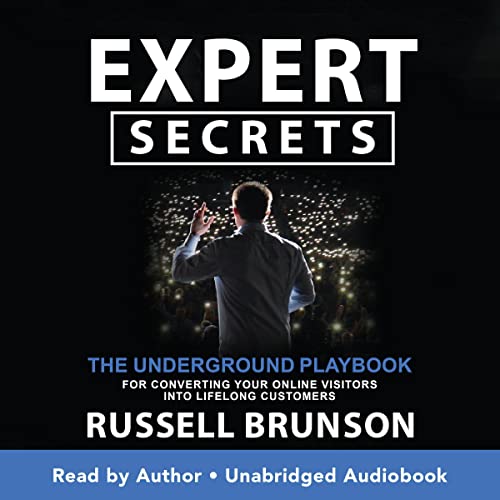
| Expert Secrets | Free Plus Shipping Book | Coaches, Trainers & Consultants | Turn your expertise into a profitable business | Free + Shipping |
| Traffic Secrets | Free Plus Shipping Book | Marketers & Business Owners | Learn sustainable traffic generation strategies | Free + Shipping |
| Secrets of Success Book Box | Free Plus Shipping | Personal Development Enthusiasts | Build success habits and entrepreneurial thinking | Free + Shipping |
| Perfect Webinar Secrets | Low-Ticket Training | Course Creators & Speakers | Use a proven webinar framework to increase conversions | $7 |
| PLR Funnels Masterclass | Training + Funnel Package | Beginners & Side Hustlers | Launch ready-made funnels without creating products from scratch | Paid |
| Course Secrets | Premium Course | Coaches & Experts | Create and sell online courses at scale, Want to know the secret to launching your offer fast? Curious about the fastest way to start generating revenue? Need help carving the perfect offer? | Free Webinar |
| Funnel Hacking Secrets Webinar | Free Webinar + Upsell | Agencies & Marketers | Learn how successful funnels are structured and optimised | Free Webclass |
| Funnel Hacking Secrets Bundle | Premium Programme | Serious Entrepreneurs | Funnel software, training and traffic strategies in one package | Premium $1,970 |
| Funnel Builder Secrets | High-Ticket Programme | Business Owners Ready to Scale | Software, training, templates and advanced funnel resources | High Ticket |
| ClickFunnels 3 months Discount Offer | Software Offer | Business Owners | Save on professional funnel software while building your business | Discounted |
| ClickFunnels Scale Plan | Premium Software | Growing Businesses | Advanced funnel building, automation and scaling tools | Monthly Subscription |

Focus on Keyword-Driven Topics
Content creation should always start with understanding what your audience is searching for. Keyword research helps you identify topics with demand and manageable competition. Rather than targeting only high-volume keywords, focus on smaller, more specific phrases that are easier to rank for.
For instance, instead of targeting a broad term like “blogging,” you could focus on “how to set up a blog for beginners” or “best web hosting for new bloggers.” Over time, ranking for multiple smaller keywords can generate significant cumulative traffic.
Write Helpful, In-Depth Articles
Search engines prioritise content that genuinely helps users. Therefore, each article should answer questions thoroughly and clearly. Long-form content often performs better because it covers topics comprehensively and keeps readers engaged longer.
In addition, using clear subheadings, short paragraphs, and logical flow improves readability. Given that user experience influences rankings, well-structured content benefits both readers and search engines.
Optimise Content Without Keyword Stuffing
Search engine optimisation should feel natural. Rather than repeating the same keyword excessively, use variations and related terms. This approach signals topical relevance without appearing manipulative.
For example, when writing about blogging, you can naturally include phrases such as creating a website, choosing a hosting provider, WordPress blog setup, and growing online traffic. This semantic approach aligns with modern search algorithms.
How to Promote Your Blog and Build Traffic

Get direct access to the strategies that built a software empire. This is the closest you can get to personal coaching from Russell, completely FREE during this special 30-day event. [Start learning for FREE.]
Leverage Search Engine Optimisation
Organic search traffic remains one of the most reliable traffic sources for blogs. By optimising each article properly, you increase the likelihood of appearing on search engine results pages. Over time, consistent optimisation compounds and strengthens your domain authority.
Engage in Niche Communities
Participating in niche-related forums, groups, and discussion platforms helps you build visibility and trust. Rather than spamming links, focus on providing value and linking back to relevant content when appropriate.
Build an Email List Early
Email marketing allows you to retain visitors and encourage repeat traffic. By offering a simple incentive such as a checklist or guide, you can encourage readers to subscribe. Over time, your email list becomes a powerful asset for promoting new content and products.

Managing multiple email campaigns across different tools was confusing and time-consuming. Imagine managing all your email marketing campaigns from one simple and powerful dashboard. Hostinger Reach for Email Marketing simplifies campaign management and improves marketing efficiency.
Ready to learn the secrets behind successful email marketing? Join this free webinar and learn directly from a successful email marketing genius who reveals the strategies used to build powerful email lists and turn subscribers into valuable business opportunities.
Comparison: Hostinger vs Free Blogging Platforms
| Feature | Hostinger Hosting | Free Blogging Platforms |
| Ownership | Full control of content | Platform-owned |
| Branding | Custom domain | Subdomain branding |
| Performance | Fast, optimised servers | Limited speed |
| Monetisation | Full flexibility | Restricted options |
| Search Engine Optimisation | Strong technical control | Limited optimisation |
This comparison clearly shows why serious bloggers choose paid hosting solutions like Hostinger.
Frequently Asked Questions
Is Hostinger good for beginners starting a blog?
Yes, Hostinger is beginner-friendly due to its simple dashboard, automatic WordPress installation, and affordable pricing.
Can I make money from a blog hosted on Hostinger?
Yes, you can monetise your blog through advertising, affiliate marketing, digital products, and services. Hostinger does not restrict monetisation methods.
Do I need technical skills to set up a blog?
No, Hostinger simplifies the process so that you can set up a blog without coding knowledge.
Conclusion: Start Your Blog the Right Way

Learn the lead generation secrets used by Russell Brunson himself in this completely FREE 5 Day Lead Challenge. [Accept the challenge.]
In conclusion, setting up a blog is one of the most accessible and scalable ways to build an online presence. However, success depends on making the right decisions from the beginning, especially when choosing web hosting. Hostinger offers an excellent balance of affordability, performance, and ease of use, making it a strong choice for beginners and growing bloggers alike.
By following the steps outlined in this guide, you can create a blog that is technically sound, search engine friendly, and ready to grow. More importantly, you now understand not only how to start a blog, but why each step matters.
If you are ready to take action, choose Hostinger, set up your blog today, and start building an online asset that can serve you for years to come.
Affiliate disclosure: This article contains affiliate links, which means I may earn a commission at no extra cost to you if you choose to purchase through these links.


